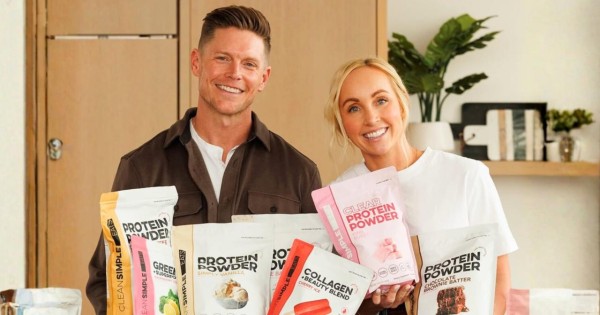
In America's $37 billion supplement industry dominated by legacy brands like Optimum Nutrition, Quest, and Premier Protein, a husband-wife team from Salt Lake City has quietly built one of the fastest-growing wellness brands by proving a simple thesis: clean eating doesn't require sacrifice. Clean Simple Eats, founded over a decade ago by Erika and JJ Peterson, emerged not from market research or venture capital but from Erika's desperate attempt to escape postpartum depression through food. Today, the brand generates multi-million dollar revenue, commands Target's number-one spot in protein powder sales, and operates with over 100 supplement SKUs all while maintaining founder control and staying true to the clean ingredient philosophy born from personal struggle.
The Petersons' journey from $30,000 in personal debt to retail dominance across Target, The Vitamin Shoppe, and expanding national distribution channels demonstrates how authentic founder stories, relentless product quality, and strategic community building can disrupt entrenched categories without institutional capital. Their October 2025 partnership with January Digital as media agency of record signals the brand's next phase: scaling beyond DTC-led growth into wholesale retail expansion fueled by paid media sophistication that targets acquisition and retention at dramatically larger scale.
The US Wellness Supplement Market: Size, Growth, and the Clean Label Movement
The United States supplement market reached $37.2 billion in 2024 and projects growth to $56 billion by 2030, driven by multiple converging trends. First, rising health consciousness accelerated by pandemic-era focus on immunity, wellness, and preventative care has normalized daily supplement consumption beyond traditional bodybuilding demographics. According to Council for Responsible Nutrition research, 77 percent of American adults now take dietary supplements, up from 65 percent in 2015, with protein powders, multivitamins, and collagen among the fastest-growing categories.
Second, the clean label movement has fundamentally reshaped consumer expectations. Transparency around ingredients, sourcing, and manufacturing processes that were previously niche demands from health enthusiasts have become mainstream requirements. A 2024 Nielsen study revealed that 73 percent of supplement buyers actively avoid products containing artificial sweeteners like sucralose or aspartame, synthetic colors, or proprietary blends that obscure ingredient quantities, transparency issues that plague legacy supplement brands formulated decades ago when clean labeling wasn't prioritized.
Third, demographic shifts favor brands like Clean Simple Eats. While traditional supplement companies marketed primarily to male bodybuilders and athletes, emerging brands increasingly target women aged 25-45 seeking functional nutrition for busy lifestyles, family health, and sustainable wellness rather than extreme physique transformation. This demographic values taste, convenience, and ingredient integrity over maximum protein concentration or cheapest price per serving, premium positioning that supports higher margins and customer lifetime value.
The protein powder category specifically represents $7.2 billion in annual US sales, with women's protein emerging as the fastest-growing subsegment at 18 percent CAGR versus 8 percent for traditional whey proteins. Clean Simple Eats operates squarely in this high-growth
sweet spot: products formulated by a woman who personally solved the "healthy food tastes bad" problem, using ingredients women trust, sold through community-building rather than aggressive bodybuilding marketing.
However, competition intensifies. Established players like Vital Proteins (acquired by Nestlé for $1.5 billion) and Orgain (valued at $500+ million) dominate clean supplement positioning with massive distribution and marketing budgets. Emerging DTC brands including Ladder, Gainful, and Ritual have raised tens of millions in venture capital to build subscription models and branded retail presence. For Clean Simple Eats to sustain growth, it must leverage founder authenticity and community loyalty to compete against better-capitalized competitors while scaling operations without losing the quality and values that built initial success.
From Postpartum Depression to Recipe Sharing: Erika's Origin Story
Erika Peterson's journey to founding Clean Simple Eats began in 2012 in the darkest period of her life. After giving birth to her third child, Erika battled severe postpartum depression, a condition affecting approximately 15 percent of new mothers but rarely discussed openly, particularly among young Mormon women in Utah where she lived. The Peterson family, overwhelmed by parenting demands and financial stress, survived on the cheapest, most convenient foods available: Pop-Tarts for breakfast, cereal for lunch, frozen pizza for dinner. Both Erika and JJ worked demanding schedules while raising three children under five, leaving no time or energy for meal planning, grocery shopping, or cooking from scratch.
The turning point came when Erika recognized that she felt worse after every meal, sluggish, irritable, unable to focus, trapped in cycles of sugar crashes that compounded her depression. Desperate for any change that might help, she made a radical decision: eliminate all processed foods and replace them with whole ingredients. She began shopping the perimeter of grocery stores, buying fresh vegetables, lean proteins, and whole grains. Without formal nutrition training, she experimented with simple recipes combining these ingredients in ways her family would actually eat.
The transformation surprised her. Within weeks, she felt noticeably more energized. Within months, the brain fog and irritability that characterized her depression began lifting. Exercise became easier and more enjoyable. She lost the baby weight not through restriction or calorie counting but by nourishing her body with nutrient-dense foods that satisfied hunger without the blood sugar spikes and crashes of processed alternatives.
Excited by her progress, Erika began documenting her journey on Instagram in 2013 then a relatively new platform where wellness influencers hadn't yet dominated the space. She posted photos of meals she prepared, shared simple recipes in captions, and honestly discussed her mental health struggles alongside her clean eating journey. The response overwhelmed her. Women across America messaged saying they faced identical challenges: busy schedules, limited cooking skills, families that resisted healthy food, and the belief that nutritious meals required hours of preparation or tasted like cardboard.
Within a year, Erika's Instagram following grew from zero to tens of thousands. Followers didn't just engage passively, they cooked her recipes, shared their results, and requested more guidance. Erika recognized an opportunity: if she systematized her approach into structured meal plans with shopping lists and prep instructions, she could help thousands of women simultaneously rather than answering individual messages.
Building the Business: From Digital Meal Plans to Supplement Empire
In 2014, Erika launched Clean Simple Eats' first product: a digital meal plan combining a week of recipes, macronutrient-balanced menus, detailed shopping lists, and meal prep strategies designed for busy families. She priced it at $27, affordable enough for her target demographic yet profitable given the purely digital delivery with zero marginal costs. Sales came entirely through Instagram marketing and word-of-mouth as satisfied customers shared results with friends.
The early years required extraordinary sacrifice. With three young children and JJ working a full-time job to cover family expenses, Erika built Clean Simple Eats entirely during nights after kids went to bed and weekends when JJ could watch the family. Revenue initially trickled in—a few hundred dollars monthly, then a few thousand. But growth remained consistent. Each quarter brought more customers than the last as Instagram's algorithm favored the engaging, authentic content Erika produced and the Clean Simple Eats community organically promoted the brand.
By 2015, digital meal plan revenue reached levels that allowed the Petersons to pay off their $30,000 personal debt accumulated during the lean startup years. Erika and JJ made a defining strategic decision: rather than taking salaries to improve their lifestyle, they reinvested every dollar of profit back into the business. This capital discipline would prove crucial when they eventually entered physical product manufacturing, which requires significant upfront capital for inventory, formulation development, and minimum order quantities.
JJ officially joined Clean Simple Eats full-time in 2016. His background in exercise and sport science from BYU Hawaii, combined with personal training experience, complemented Erika's nutrition focus. Together, they expanded offerings beyond meal plans to include fitness programs, workout videos, and quarterly "CSE Challenges", seven-week structured programs combining daily workouts, meal plans, and community support that became the brand's signature offering, attracting tens of thousands of participants paying $97 per challenge.
The challenges created something invaluable: a highly engaged community united by shared goals and mutual support. Challenge participants formed Facebook groups, shared progress photos, held each other accountable, and developed genuine friendships. This community loyalty would become Clean Simple Eats' most defensible competitive advantage, customers weren't just buying meal plans or supplements, they were joining a movement led by founders who genuinely understood their struggles.
Entering Physical Products: The 2018 Supplement Launch
By 2017, Clean Simple Eats had achieved consistent profitability from digital products, but Erika and JJ recognized limitations. Digital meal plans generated revenue once per customer with limited repeat purchase opportunities unless customers joined multiple challenges. The business model required constant new customer acquisition to sustain growth. Physical products, particularly supplements used daily, offered recurring revenue through repeat purchases while deepening customer relationships beyond quarterly challenges.
However, entering the supplement space presented massive challenges for a bootstrapped company. Product formulation required expertise the Petersons didn't possess. Manufacturing demanded minimum order quantities often exceeding 10,000 units, capital commitments that could bankrupt the business if products didn't sell. Quality control, FDA compliance, third-party testing, packaging design, warehousing, and logistics all added complexity far beyond digital delivery.
JJ took ownership of supplement development, leveraging his exercise science background and partnering with formulators to create products aligned with Clean Simple Eats' values. The non-negotiable requirements: no artificial sweeteners (specifically excluding sucralose, aspartame, and ace-K that dominated competitors' formulas), no artificial colors or flavors, transparent labels listing all ingredients and quantities, and exceptional taste that rivaled conventional supplements despite clean ingredient constraints.
The first products launched in 2018: a vanilla and chocolate protein powder using whey protein isolate, naturally sweetened with stevia and monk fruit, and flavored without artificial additives. The challenge was immense—most clean protein powders tasted chalky, gritty, or unpleasantly sweet from stevia overuse. JJ iterated through dozens of formulations, conducting taste tests with community members until achieving flavors that customers genuinely enjoyed drinking daily.
Clean Simple Eats pre-sold the first production run through email and Instagram marketing to the existing community, generating enough revenue to fund manufacturing costs before placing factory orders. This validated demand while eliminating inventory risk, a strategy the Petersons would repeat with each new product launch. The community responded enthusiastically, not just buying protein powder but sharing testimonials, posting photos of morning protein shakes, and recruiting friends to try products.
Building on protein success, Clean Simple Eats expanded into greens powders (providing vegetable nutrients in drinkable form for people who struggled eating enough vegetables), collagen mixes (supporting skin, hair, nail, and joint health, particularly appealing to the female demographic), pre-workout formulas, and eventually over 100 SKUs across multiple categories including wellness supplements, functional snacks, and meal replacement shakes.
The Target Breakthrough: From DTC to Retail Dominance
For years, Clean Simple Eats operated primarily direct-to-consumer through its website, supplemented by presence in specialty retailers like The Vitamin Shoppe and independent health food stores. DTC provided high margins (50-60 percent gross margins versus 30-35 percent through retail), direct customer relationships for email marketing and community building, and full control over brand presentation.
However, DTC growth eventually plateaus as brands saturate their addressable online audience and customer acquisition costs rise with increased competition for digital advertising. To reach the next growth stage, Clean Simple Eats needed mass retail distribution that put products in front of millions of consumers who would never discover the brand online.
The Target partnership, launched in early 2025, transformed the business. Target's wellness and supplements aisle reaches 37 million customers weekly across 1,900+ stores nationwide. For Clean Simple Eats, Target placement meant exposure to consumers who had never heard of the brand but purchased supplements regularly—an addressable market hundreds of times larger than the Instagram follower base.
More remarkably, Clean Simple Eats didn't just secure shelf space, it dominated sales. By October 2025, the brand became Target's number-one best-selling protein powder across all brands in the category, outselling established players like Premier Protein, Orgain, and private-label Target brands despite Clean Simple Eats' premium pricing ($39.99 for a 2-pound tub versus $24.99-29.99 for competitors).
This sales velocity validated several strategic bets. First, that consumers increasingly prioritize ingredient quality over price, willingly paying premiums for transparency and clean formulations. Second, that taste matters enormously, Clean Simple Eats' emphasis on exceptional flavor despite clean ingredients won blind taste tests against competitors, driving repeat purchases. Third, that authentic founder stories resonate at retail, Target shelf tags and product packaging featuring Erika's journey created emotional connection that generic corporate brands couldn't replicate.
October 2025: The January Digital Partnership Signals Scale Ambitions
In October 2025, Clean Simple Eats appointed January Digital as its media agency of record, responsible for strategy, planning, and execution across Google and Meta platforms with focus on customer acquisition and scalable growth. For a brand that built success organically through community and word-of-mouth, hiring a sophisticated growth marketing agency signals strategic evolution from founder-led DTC operation to professionally managed omnichannel brand.
January Digital brings expertise Clean Simple Eats lacked internally: performance marketing at scale, creative testing methodologies that identify winning ad variations, attribution modeling connecting ad spend to revenue across multiple touchpoints, and platform relationships with Google and Meta that provide advantages for high-spending clients. In the partnership's first weeks, January Digital conducted strategic platform assessments, reimagining creative and media to increase testing velocity, expand creative variety, and strengthen paid media performance.
The timing aligns with Clean Simple Eats' retail expansion. As Target distribution creates awareness among millions of consumers, paid media can capture search intent ("best clean protein powder"), retarget retail browsers who didn't purchase, and drive them to both cleansimpleeats.com for DTC purchases and Target.com for retail pickup, maximizing revenue regardless of purchase channel.
The investment in sophisticated media capabilities also suggests revenue scale justifying agency fees. January Digital typically works with clients spending $100,000+ monthly on paid media—implying Clean Simple Eats has reached revenue levels (likely $20-30+ million annually) where professional growth marketing delivers positive ROI versus founder-managed campaigns.
Business Model: High Margins, Recurring Revenue, and Community Moats
Clean Simple Eats' financial model demonstrates why the wellness supplement category attracts entrepreneurs and investors despite intense competition. The economics start with product margins. Clean Simple Eats' protein powder retailing at $39.99 likely costs $8-12 to manufacture including ingredients, packaging, quality testing, and warehousing. Selling direct-to-consumer at $39.99, the brand captures $27-31 gross profit per unit, approximately 70 percent gross margin. Wholesale through Target at $20-22 per unit still delivers $8-10 gross profit or 40-50 percent margins, healthy economics that support marketing spend and overhead while maintaining profitability.
Revenue recurs naturally. Customers consuming protein shakes daily finish a 2-pound tub in 3-4 weeks, creating automatic repurchase cycles. Subscription programs offering 10-15 percent discounts for auto-delivery every month lock in recurring revenue while reducing customer acquisition costs to zero after initial conversion. The lifetime value of a protein customer spending $40 monthly for 18-24 months before churning reaches $720-960, justifying customer acquisition costs of $50-100 through paid advertising while maintaining profitability.
The digital meal plans and challenges complement physical products by driving awareness and community engagement. A customer might join a $97 seven-week challenge, discover Clean Simple Eats supplements through the program, convert to monthly protein subscriptions, and eventually purchase the full product line including greens, collagen, and snacks, expanding lifetime value from $100 to $2,000+ over several years.
Perhaps most valuable: the community itself acts as marketing engine. Clean Simple Eats' Instagram community of 569,000 followers plus private Facebook groups for challenge participants generate organic content daily, workout selfies featuring Clean Simple Eats protein shakers, recipe videos using the products, transformation photos crediting the brand. This user-generated content provides authentic social proof that paid advertising cannot replicate, while community members recruit friends and family without compensation simply because they genuinely believe in the products.
This community moat explains how Clean Simple Eats competes against better-capitalized competitors. While Vital Proteins spends millions on celebrity endorsements and TV advertising, Clean Simple Eats grows through authentic customer advocacy that costs nothing yet builds deeper loyalty and trust.
Challenges and Risks: Competition, Supply Chain, and Scaling Complexity
Despite impressive growth, Clean Simple Eats faces significant challenges that could constrain future trajectory. First, category competition intensifies as venture-backed startups and multinational corporations all pursue the clean supplement opportunity. Brands like Ladder (backed by LeBron James and Arnold Schwarzenegger) bring celebrity credibility and enormous marketing budgets. Legacy players including Nestle-owned Vital Proteins leverage global distribution and procurement scale that delivers cost advantages Clean Simple Eats cannot match. Maintaining differentiation as competitors copy formulations, positioning, and even community-building tactics will require continuous innovation.
Second, supply chain complexity multiplies as the brand expands SKUs and retail channels. Managing over 100 products across wholesale accounts, DTC fulfillment, and international expansion demands sophisticated inventory management, demand forecasting, and supplier relationships. A single stockout at Target during peak season could cost hundreds of thousands in lost sales and damage retailer relationships. Conversely, over-ordering creates cash flow strain from tied-up inventory and potential obsolescence if products near expiration dates.
Third, scaling organizational capabilities from founder-operated startup to professional consumer brand requires hiring talent, implementing systems, and establishing processes, changes that risk diluting the authentic, personal touch that attracted customers initially. Erika and JJ must balance delegation to professional executives against maintaining founder involvement that makes the brand feel different from corporate competitors.
Fourth, retail expansion brings margin pressure. While Target distribution creates volume, retailers demand promotional support, markdown allowances for unsold inventory, and slotting fees for shelf space, costs that compress the 40-50 percent wholesale margins. Target's private-label protein powders directly compete at $10-15 lower price points, requiring Clean Simple Eats to convince consumers that premium positioning justifies the cost difference.
Fifth, regulatory scrutiny on supplement claims and ingredient sourcing continues tightening. The FDA increasingly audits supplement manufacturers for GMP compliance, label accuracy, and substantiation of health claims. Any quality control failure, contamination, mislabeling, adverse event reports, could trigger recalls, legal liability, and brand reputation damage that destroys customer trust built over years.
The Path Forward: Vision for National Leadership in Clean Wellness
Despite challenges, Clean Simple Eats is strategically positioned for continued growth. The October 2025 January Digital partnership will optimize paid media efficiency, reducing customer acquisition costs while scaling reach beyond organic social capabilities. Target's number-one protein powder ranking provides credibility that opens doors to additional retail partners, likely including Walmart, Kroger, and regional grocery chains that collectively reach hundreds of millions of consumers.
International expansion represents significant whitespace. Clean Simple Eats currently operates primarily in the United States, but clean wellness trends are global phenomena. Canada, United Kingdom, Australia, and Germany all demonstrate strong consumer demand for clean supplements, with less saturated competitive landscapes than the US market. International distributors in these markets actively seek American wellness brands with proven US traction and scalable product lines.
Product innovation will extend beyond supplements into adjacent categories. Clean Simple Eats could launch ready-to-drink protein shakes competing with Fairlife and Premier Protein, protein bars rivaling RxBar and Quest, functional snacks like protein chips or cookies, and even expand into broader wellness products like clean skincare or personal care items leveraging brand trust to capture additional wallet share from existing customers.
Strategic partnerships or acquisition could accelerate growth. Clean Simple Eats' proven brand equity, loyal community, and profitable operations make it attractive to multinational consumer companies seeking to acquire rather than build clean wellness brands. Companies like Nestlé, Unilever, Hormel (owner of Muscle Milk), or Post Consumer Brands (owner of Premier Protein) regularly acquire emerging brands reaching $30-50 million revenue and demonstrating sustainable growth, valuations likely in the $100-300 million range depending on profitability and growth trajectory.
Alternatively, the Petersons may choose independence, building Clean Simple Eats into a generational family business similar to Chobani or Kind Snacks—founder-controlled brands that scaled to billion-dollar valuations without venture capital or acquisition. This path requires patient capital, disciplined growth, and long-term orientation, but preserves the values and authenticity that differentiate Clean Simple Eats from corporate competitors.
Lessons for Aspiring Wellness Entrepreneurs
Clean Simple Eats' journey from postpartum depression to Target dominance offers actionable insights for entrepreneurs pursuing wellness brands:
First, solve your own problem. Erika didn't study market research she solved her personal struggle, then discovered millions of women faced identical challenges. This authentic founder story cannot be fabricated or copied.
Second, build community before products. Clean Simple Eats spent years building engaged Instagram and Facebook communities through meal plans and challenges before launching physical products. This community provided built-in distribution, feedback for product development, and loyal customers who purchased immediately upon launch.
Third, prioritize quality over speed. Despite pressure to launch quickly, JJ iterated through dozens of protein formulations until achieving exceptional taste. That quality obsession drove Target's number-one ranking and repeat purchase rates that sustain the business.
Fourth, stay bootstrapped as long as possible. The Petersons' decision to reinvest profits rather than raise venture capital preserved equity and control while proving business viability before pursuing outside investment or partnerships.
Fifth, master one channel before expanding. Clean Simple Eats dominated DTC and built profitability before retail expansion. This prevented the cash burn that destroys brands launching into retail prematurely without proven demand.
Sixth, choose partners strategically. The January Digital partnership came after achieving scale that justified agency fees and expertise that founders couldn't replicate internally—adding capabilities rather than outsourcing core competencies.
Conclusion: Proving Clean Eating Can Taste Exceptional
JJ and Erika Peterson's Clean Simple Eats demonstrates that wellness brands built on authentic founder stories, genuine product quality, and community-first approaches can compete successfully against well-capitalized incumbents and venture-backed disruptors. From $30,000 in debt to Target's best-selling protein powder represents more than financial success it validates that consumers increasingly reward transparency, integrity, and brands that prioritize customer wellbeing over maximum profit extraction.
As Clean Simple Eats enters its next growth phase with sophisticated marketing capabilities, expanding retail presence, and over 100 products serving daily wellness needs, the Petersons' original mission remains unchanged: proving that clean eating doesn't require sacrifice, that healthy food can taste exceptional, and that sustainable wellness comes from nourishment rather than restriction.
For the millions of Americans seeking alternatives to ultra-processed foods and synthetic supplements, Clean Simple Eats offers proof that better options exist—created by founders who personally walked the journey from struggling to thriving through simple, clean, delicious nutrition.
Read more: www.entrepreneurnews.org