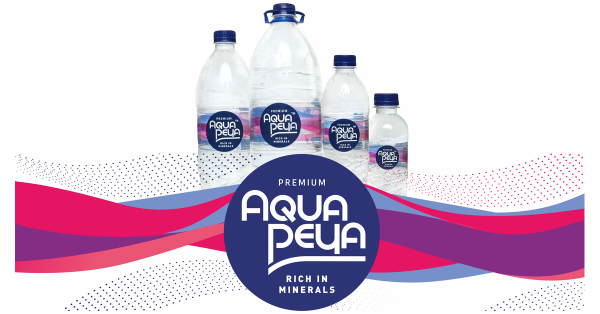
Every summer, India's packaged water market turns into a stress test. Temperatures climb, demand spikes overnight, and the gap between brands that can supply consistently and those that cannot becomes visible on every shop shelf. The summer of 2026 was harsher than most. The India Meteorological Department recorded temperatures crossing 45 degrees Celsius across several regions, with feels-like readings nearing 52 degrees in parts of the north, and it forecast an above-normal number of heatwave days for the year. Against that backdrop, Aquapeya, the flagship brand of Natvits Beverages Pvt. Ltd., says it reached 10 million consumers in 100 days.
For a homegrown brand that was bootstrapped for most of its life, the figure is notable. What is more telling is how the company chooses to frame it. Tushar Mundada, Co-Founder and Chief Executive Officer of Natvits Beverages, does not present the number as a sales record. He presents it as a count of decisions, ten million individual moments in which someone reached for one bottle over another during a season when reliability was scarce.
A Season That Separated Intent From Execution
The hundred-day window was difficult for reasons beyond the heat. Producers across the essential-goods category faced climbing raw-material costs, freight pressure, and patchy availability of skilled labour at exactly the point when consumer demand was at its peak. For a packaged water company, the squeeze is specific: input and logistics costs rise while the product itself remains price-sensitive, leaving little room to pass costs along without losing shelf velocity.
According to Aquapeya, the response was operational rather than promotional. The company says it tightened the coordination between manufacturing, logistics, and distribution, sharpened its demand planning, and kept its field teams in close contact with distribution partners through the peak weeks. The stated outcome was continuity of supply, with stock reaching outlets without the quality drift that often accompanies a scramble to meet surging demand.
That posture fits the brand's history. Natvits Beverages operates a fully automated facility of more than 40,000 square feet and has built its reputation on consistency across a portfolio that runs from packaged drinking water to fruit juices, carbonated soft drinks, and energy drinks. Water accounts for the bulk of the business. In a category where execution quietly decides who survives, the company's argument is that the summer rewarded the unglamorous work of keeping a supply chain intact.
The Numbers Behind the Claim
It is worth being precise about what is independently established and what rests on the company's own account.
The 10 million consumer figure, the smoothness of a recent rebrand, and the read on consumer trust are Aquapeya's own statements, issued through the company. They are reasonable and consistent with its trajectory, but they have not been independently audited, and they are best read as the brand's assessment of its own performance.
What is verifiable is the foundation underneath the claim. Aquapeya has built distribution across more than 10,000 retail outlets supported by over 100 distributors, concentrated in Maharashtra and Karnataka, with the company's daily output running to roughly one lakh bottles. That network is the practical reason a hundred-day reach figure of that scale is plausible. A brand cannot place ten million purchase decisions within reach without first placing product within reach.
The product mix is also instructive. Water has historically driven the majority of Aquapeya's revenue, while a regional favourite, cumin soda, has contributed a meaningful slice alongside juices and other lines. That blend of a mass-volume staple and locally tuned flavours has been central to how the brand has carved space in a market dominated by national giants.
From a Shark Tank Cheque to a National Push
Aquapeya's profile rose sharply after its appearance on Shark Tank India Season 4. The founders, brothers Tushar Mundada and Ravi Mundada, the latter serving as Co-Founder and Chief Technology Officer, secured a joint deal with two of the programme's best-known investors. Namita Thapar, Executive Director of Emcure Pharmaceuticals, and Ritesh Agarwal, Founder and Chief Executive Officer of OYO, together invested Rs 70 lakh for a 3 percent equity stake plus a 1 percent royalty until the investment was recouped, a deal that valued the company at Rs 23.33 crore.
The capital mattered, but the mentorship and the visibility arguably mattered more for a regional player trying to graduate into a recognised name. At the time of the deal, the company outlined plans to expand production capacity at its existing plant and lift revenue meaningfully. Aquapeya continues to credit the backing of Namita Thapar and Ritesh Agarwal as a factor in shaping its direction, a relationship that gives a Sangli-rooted brand a foothold in conversations usually reserved for incumbents.
That lineage is part of why the summer milestone reads as a continuation rather than a surprise. The brand had already signalled an intent to move beyond its home markets. The hundred-day stretch was, in effect, a public demonstration of whether the operational base could carry that ambition under pressure.
A Rebrand at the Worst Possible Time
The same period saw Aquapeya take a visible risk. The company rolled out a refreshed brand identity and new packaging across its markets in the middle of peak season, the moment when any disruption to recognition is most costly. Redesigns are deceptively dangerous in fast-moving consumer goods. Shoppers buy on reflex, and a changed look can break the split-second recognition that drives a repeat purchase as easily as it can refresh appeal.
By the company's account, the transition landed well, with retailers, distributors, and buyers adopting the new design quickly. Aquapeya reads that reception as evidence that considered design paired with consistent quality reinforces loyalty rather than testing it. The claim deserves the same caution as the consumer figure, since acceptance of a rebrand is difficult to measure cleanly in real time. Still, executing a packaging change without a visible supply or recognition stumble during the busiest months is a meaningful operational signal in its own right.
Where the Market Is Heading
The timing sits inside a structurally favourable market. India's packaged drinking water sector was valued at roughly Rs 32,040 crore, about 3.6 billion US dollars, in 2025, according to the India Brand Equity Foundation, and is projected to reach close to Rs 57,850 crore, around 6.5 billion dollars, by 2032. Independent estimates from Persistence Market Research put the category's compound annual growth rate near 8.8 percent over that horizon.
The drivers are well documented. Rapid urbanisation, rising health awareness, persistent doubts about municipal and groundwater quality, and the spread of quick-commerce delivery have together turned bottled water from a travel-time purchase into a daily-use product across homes, offices, and institutions. Regulation is tightening in parallel. The Food Safety and Standards Authority of India has classified packaged water as a high-risk category requiring annual third-party audits, a shift that raises compliance costs and tends to favour operators with disciplined quality systems.
That regulatory tilt is significant for a brand like Aquapeya. The market remains highly fragmented, with thousands of regional players and the top handful of national names holding only around a third of total share. As enforcement sharpens and consumers increasingly equate brand with safety, the advantage moves toward companies that can demonstrate consistency at scale. The competitive question is no longer only about price or visibility. It is about whether a buyer trusts that the next bottle will be exactly like the last one.
The Test of What Comes Next
The most useful way to read Aquapeya's hundred days is not as a finish line but as a proof of concept. The company has shown, on its own account and on the strength of a verifiable distribution base, that it can hold quality and availability through a punishing season while changing its packaging at the same time. That is a harder combination than any single headline number suggests.
Reflecting on the milestone, Tushar Mundada framed it in terms of trust rather than transactions. "Reaching 10 million consumers in just 100 days is far more than a business achievement," he said. "It is a reflection of the trust millions of consumers have placed in Aquapeya. Every bottle purchased represents confidence in our commitment to quality, reliability, and safe hydration." He has been explicit that the company sees the figure as an early marker on a longer road, with plans to deepen its national footprint, widen distribution, and keep investing in the everyday experience of the product.
The ambition is clear and the market is expanding. What will decide whether Aquapeya converts a strong summer into a durable national position is the same discipline that carried it through the heat: sustaining quality as volumes rise, managing margins under regulatory and cost pressure, and keeping supply intact as it pushes into markets where it has no incumbency. The hundred days answered the first question. The next several years will answer the rest.